Finger picking is a simple skill that can greatly improve your playing, and it isn’t just for folk and country players! If you are usually a pick player, you may just be surprised about the different textures that become open to you.
Category: Guitar Primers
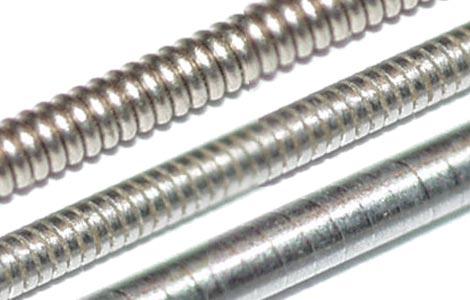
Bass Guitar Strings
A new set of strings can do wonders for a bass. If the old set have been on for a while, the sound they produce will be dull and lifeless. Old strings can be the cause of fret buzz and intonation problems, and in a worse-case scenario could snap during performance. Bass guitar strings last longer than guitar strings, but a new set can really invigorate your bass
How long a string takes to become ‘old’ depends on several factors: how much it is played, whether it is wiped down after use, and even how corrosive the perspiration of the player. Top players may change their strings nightly; only fresh strings give them the sound they want, whilst a bass that spends very little time in use – perhaps avoiding gig situations – will be fine for months or years.
So, now you’ve decided to treat your beloved bass to a new set, how do you decide what to buy? There are a lot of choices, but which ones are right for you? Long scale? shortscale? roundwound? flats?
This article describes some of the main types, to help the reader identify the best bass strings for them…
Choosing Between Time-Based Distortion Pedals
Time-based distortion pedals (we’re talking flange, echo, an chorus) are less widely used as other types of distortion, but are still the best option for some of the more unique sounds that come from distortion pedals. Much of these effects are great for solos, but some practical uses that the everyday guitar player would experience exist as well. Even rhythm guitarists are cashing in on this less popular type of distortion, but there are a few things to look out for when buying them.
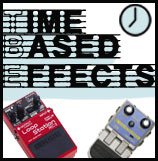
Figure 1 – When it comes to time based effects, don’t be surprised to see Boss pedals take the lead in most categories. (Pictured on the left)
Continue reading Choosing Between Time-Based Distortion Pedals
Are Pop Filters Necessary for Recording?
Not a whole lot of guitar players cash in on the benefits of a pop filter, but no one can blame them. Most of the affordable pop filters break or fail within weeks of having them- or don’t even work at all. This has led a lot of innovative guitar players who are looking to record vocals to become creative- everything from putting a shirt over their mouth to making makeshift pop filters from tennis rackets.
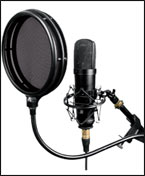
Figure 1 – They may resemble tennis rackets, but pop filters can mean the difference between a professional sound, and just another home-made recording.
Alternate Picking – Is it Worth the Effort?
Alternate picking is said to provide more sustain and tone control, as stated by guitar legends such as Steve Morse. This type of picking pattern takes more time to learn than natural picking patterns such as directional picking. Most guitar players seek to use a hybrid of the two picking patterns instead, so the best of both worlds may be enjoyed.
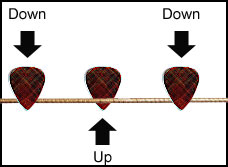
Figure 1 – With alternate picking, up-strokes and down-strokes are alternated. There are a few benefits and disadvantages over direct picking that guitar player should be aware of.
Continue reading Alternate Picking – Is it Worth the Effort?
Music Theory – The Importance of Rhythm
Rhythm is one of the three building blocks of music theory. Without it, timing wouldn’t exist- much like the basic tablature system lacks timing and rhythm. For music theorists who take the time to learn the three building blocks of music theory- rhythm, harmony, and melody; the payout will be enormous in the long run.
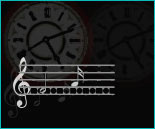
Figure 1 – Timing and rhythm are part of the core essentials of music theory- learning rhythm is vital to grasp harder music theory concepts.
Recording Options for Guitarists
Guitar players who are looking to record live sound for the first time will inevitably see a large amount of mistakes and errors along the way. Most beginners are simply satisfied with propping up a cheap microphone headset against the amplifier speaker and jamming away. Once the initial “cool” factor of being able to record music dies, guitarists looking to record their favorite riffs or songs will realize that a little more thought needs to go into the recording process.
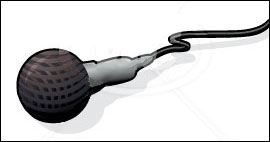
Figure 1 – Recording relies on many components- not just a microphone. Monitors, stands, interfaces, cables, and software will likely have to be bought.
Choosing Between Basic Distortion Pedals
Distortion is absolutely necessary if a guitar player is to play any type of rock or metal. Basic distortion seeks to “dirty up” a signal, and to make it sound more dynamic or “crunchy.” Out of the basic distortion family, there is overdriven, fuzz, crunch, high gain types of distortion.
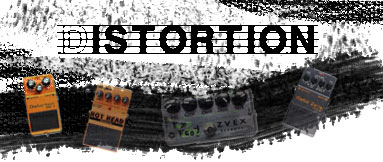
Figure 1 – There are several basic types of distortion that guitar players should explore. Fuzz crunch, overdrive, and high-gain will be the most common.
How to Read Tablature
Not everyone has the time or patience to learn how to read and write music with standard notation. Tablature, also called tabulature or tabs, is the world-renown solution that proves to be much faster in terms of learning, writing, or reading a song in standard notation. In fact, it is much more likely that a guitarist seeking to learn a song will find tablature long before standard notation is found.
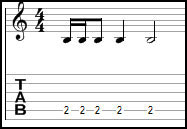
Figure 1 – The top shows standard notation, while the bottom shows tablature. Notice how there is no rhythm or timing for tablature, as compared to standard notation.
An Introduction to Music Theory for Guitarists
Music theory is vital to any guitar player that is looking forward to a long-term hobby or even profession. The majority of young guitarists decide to skip music theory, and instead start learning tablature of idolized bands. This is often a bad idea for a number of reasons, and is usually better to learn music theory first- however “less fun” it might be, since it will be a phenomenal help in the long run.
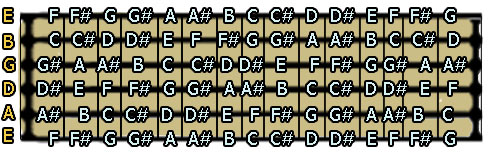
Figure 1 – It might not look like a fretboard, but it is! Don’t worry if it looks confusing- it’s actually quite simple. Learning music theory is vital to the avid guitarist!
Continue reading An Introduction to Music Theory for Guitarists